
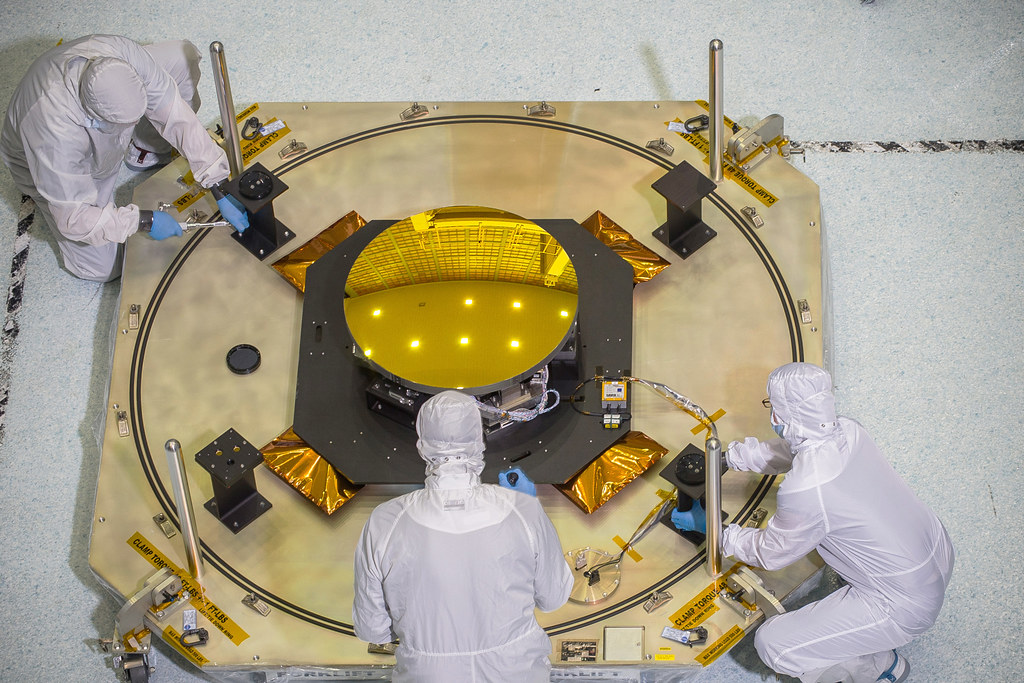
NASA telescope infrared sources are set to become more visible thanks to innovative Dutch detectors. This advancement promises to enhance our understanding of faint cosmic phenomena.
How Dutch Detectors Enhance NASA’s Capabilities
The recent collaboration between NASA and Dutch researchers aims to significantly enhance the capabilities of telescopes in detecting faint infrared sources. These advancements are crucial for a better understanding of the universe, as many celestial phenomena emit their energy in the infrared spectrum.
At the heart of this innovation are advanced detectors developed in the Netherlands, which utilize cutting-edge technology to improve sensitivity and resolution. The detectors are designed to operate efficiently in extreme conditions, allowing NASA’s telescope to capture images and data that were previously out of reach.
- Precision: The Dutch detectors feature enhanced precision, enabling astronomers to pinpoint faint objects more accurately.
- Speed: These detectors can process data at a much faster rate, allowing for quicker analysis of celestial events.
- Versatility: Their design accommodates a variety of wavelengths, making them suitable for diverse astronomical observations.
With these improvements, NASA’s telescope will not only be able to identify new infrared sources but also expand our understanding of the universe’s structure and evolution. The collaboration exemplifies how international partnerships can lead to groundbreaking technological advancements in space exploration.
The Importance of Infrared Sources in Astronomy
The study of infrared sources is crucial in the field of astronomy, as these emissions provide valuable insights into various celestial phenomena. Unlike visible light, infrared radiation can penetrate dust clouds, allowing astronomers to observe regions of space that are otherwise obscured. This ability to unveil hidden structures makes infrared sources essential for understanding star formation, the composition of distant galaxies, and the characteristics of exoplanets.
NASA’s advancements in infrared detection technology, particularly through the use of Dutch detectors, enhance the capacity to identify and analyze these faint signals. By improving sensitivity and resolution, these detectors facilitate the characterization of a broader range of infrared sources, leading to discoveries that might have remained elusive.
Some key benefits of studying infrared sources include:
- Revealing the Universe’s History: Infrared observations help trace the formation and evolution of stars and galaxies over cosmic time.
- Understanding Exoplanets: These sources can indicate the presence of atmospheres and potential habitability of planets outside our solar system.
- Investigating Cosmic Structures: Infrared data aids in mapping the distribution of dark matter and understanding the large-scale structure of the universe.
As NASA continues to innovate with its telescope technology, the exploration of infrared sources will play an increasingly vital role in unraveling the mysteries of the cosmos.
Innovations in Space Technology
The landscape of space technology is evolving rapidly, with innovations continually shaping our understanding of the universe. Recent advancements have focused on enhancing the capabilities of telescopes, particularly those employed by NASA. One of the most significant breakthroughs is the development of sophisticated detectors that improve the ability to identify faint infrared sources. These enhancements not only expand the range of observable phenomena but also refine the accuracy of data collected from distant celestial bodies.
Among the key innovations are:
- High-Sensitivity Sensors: These sensors are designed to detect even the faintest signals from the cosmos, allowing researchers to gather valuable information about distant stars and galaxies.
- Advanced Processing Algorithms: By employing cutting-edge algorithms, scientists can filter through noise and enhance the quality of the data received from infrared sources.
- Compact Design: The new detectors are smaller and lighter, making them ideal for integration into various spacecraft and telescopes.
As NASA continues to push the boundaries of what is possible in space observation, the ability to detect infrared sources with precision becomes increasingly vital. These innovations not only promise to deepen our understanding of the universe but also pave the way for future explorations and discoveries.
Challenges in Detecting Faint Cosmic Objects
Detecting faint cosmic objects has always posed significant challenges for astronomers. The vastness of space often means that many celestial bodies emit very low levels of light, making them difficult to identify with traditional optical telescopes. This is where the advancements in infrared detection come into play, particularly through the work being done with NASA’s telescope infrared sources.
One of the primary issues in detecting these faint objects is the overwhelming background noise generated by both cosmic radiation and our own atmosphere. This interference can obscure the signals from distant stars and galaxies, making it nearly impossible to discern their existence. In addition, the limited sensitivity of older detectors means that many faint sources go unnoticed.
To combat these challenges, researchers are developing more sophisticated technologies. For example, the integration of Dutch detectors into NASA’s telescope has significantly improved the ability to capture infrared sources. These state-of-the-art detectors are designed to operate effectively in the challenging conditions of space, allowing for greater sensitivity and enhanced image quality.
With these advancements, astronomers can now explore previously unobservable regions of the universe, opening up new avenues for research and discovery.
Future Implications for Space Exploration
The advancements in detection technology are set to revolutionize our approach to space exploration. With NASA’s telescope utilizing sophisticated infrared sources, scientists can expect a significant leap in our understanding of the universe. These developments provide an opportunity to explore previously unobservable cosmic phenomena, shedding light on the formation of stars and galaxies.
One of the most exciting future implications involves the search for exoplanets. Enhanced infrared capabilities allow researchers to identify and analyze the atmospheres of distant worlds, potentially revealing signs of life. As we refine our ability to detect faint infrared sources, the prospect of discovering habitable conditions beyond our solar system becomes increasingly plausible.
Moreover, the integration of Dutch detectors into NASA’s telescope will facilitate the study of dark matter and dark energy, two of the most enigmatic components of the universe. By capturing subtle infrared signals, scientists can piece together the puzzle of how these forces shape cosmic structures.
Finally, these technological advancements will inspire a new generation of astronomers and engineers. As we expand our capabilities in detecting faint cosmic objects, the future of space exploration looks promising, encouraging collaborative efforts in international space research and fostering innovation across scientific disciplines.
The advancements in technology have significantly improved our ability to analyze NASA telescope infrared sources. With smart detection algorithms, researchers can now identify and categorize these sources more efficiently than ever before.
By James Webb Space Telescope via Openverse

Leave a Reply